Shiba Inu
Shiba
Shiba Inu: does it suit you?
11 quick questions, the same ones this page answers. After each answer you see what the breed needs, and at the end whether it fits your life.
Shiba Inu: a good fit for you
Shiba Inu: could work, with compromises
Shiba Inu: probably not the right dog for you
Your answers match what the breed needs.
Most of your answers fit. Check the points below before you decide.
Some of your answers don't fit what the breed needs. The points below show where.
What to think about
What fits
A better match for your answers:
None of the 42 breeds on this site fits your answers better.
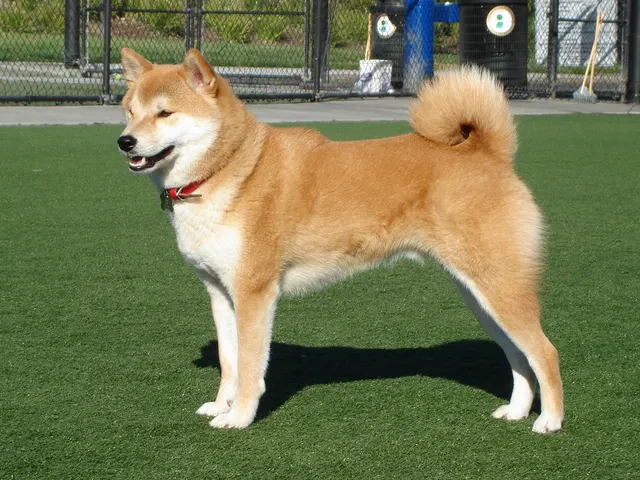
The Shiba Inu has been a native Japanese breed since primitive times; it lived in the mountainous country facing the Sea of Japan and was used to hunt small animals and birds.[1] Today the FCI standard lists it as a hunting dog for birds and small game and as a companion dog.[1] It describes the temperament as faithful, with keen senses and high alertness.[1] The American Kennel Club calls the breed spirited and good-natured.[2]
- Size
- Small
- Weight
- 7–11 kg
- Life expectancy
- 12–15 years
Shiba Inu: origin and history
The FCI standard says that the word ‘Shiba’ originally refers to something small, a ‘small dog’.[1] The American Kennel Club gives another reading: ‘Shiba’ means ‘brushwood’, after the brush in the mountains or the dog’s reddish colour, and ‘Inu’ means ‘dog’.[2]
When English Setters and English Pointers were imported between 1868 and 1912, hunting became a sport in Japan, and crossbreeding with these dogs made the pure Shiba rare.[1] From around 1928 hunters and other educated people began seriously preserving the few remaining pure strains, and the breed standard was unified in 1934.[1] In 1937 the Shiba was designated a ‘natural monument’, after which it was bred and improved into the breed known today.[1] In the FCI system it belongs to Group 5 (Spitz and primitive types), Section 5 (Asian Spitz and related breeds).[1]
Fact sheet
- Origin
- Japan
- Size
- Small
- Height at withers
- 35–41 cm [1]
- Weight
- 7–11 kg
- Life expectancy
- 12–15 years
- Coat
- Medium length
- Colours
- Red, black and tan, cream
- Low-shedding coat
- No
Character and needs
Rated on a scale from very low to very high.
- Exercise needsmoderate
- Trainabilitylow
- Grooming needslow
- Sheddinghigh
- Barkinglow
- Good with kidslow
- Good with other dogslow
- Good with catslow
- Apartment-friendlyhigh
- Copes with being alonehigh
- Watchdog instinctmoderate
- Good for first-time ownerslow
- Affectionlow
Shiba Inu: questions and answers
Is it a good dog for first-time owners?
Not as a first dog. It rates 2 out of 5 for first-time owners. These dogs are independent and can be stubborn, so training takes longer (2 out of 5 for trainability). If it would be your first dog, plan for a puppy class and a trainer who knows the breed.
How long can it be left alone?
Up to 6 hours, once the dog is an adult and has learned to be alone step by step. The breed copes with time alone better than most (4 out of 5 for coping alone). More than 6 hours at a stretch isn't fair on any dog; plan for a dog sitter or daycare. Puppies need company: start with a few minutes and build up.
How much exercise does it need?
1 to 2 hours a day, spread over several walks. A mix of walks and play keeps the dog balanced.
How long does it live?
12–15 years is the typical life expectancy. That is about the average of the 42 breeds on this site (12.6 years). Breed-typical health risks: skin allergies, luxating patella, eye disease.
How big does it get?
35–41 cm at the withers and 7–11 kg. Size class: small.
Is it a good family dog?
Better in a home with older children or adults only. It rates 2 out of 5 with children. With other dogs it rates 2 out of 5, with cats 2 out of 5. Never leave young children alone with any dog.
Does it shed a lot?
Yes, a lot: 4 out of 5 for shedding. Expect hair on clothes, sofa and car all year round. Brush once or twice a week.
Male or female?
38–41 cm at the withers for males and 35–38 cm for females, according to the breed standard. Character differences between the sexes are smaller than between individual dogs; upbringing matters more. Unspayed females come into heat about twice a year, and unneutered males can be restless around them.
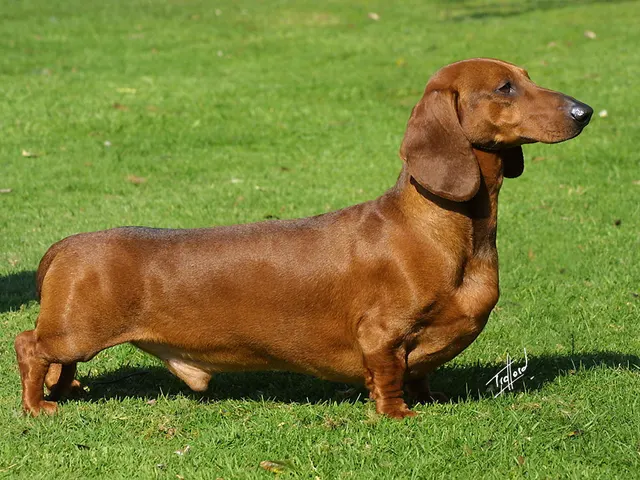
Shiba Inu or Dachshund?
Biggest difference: shedding (high vs. low).
| Shiba Inu | Dachshund | |
|---|---|---|
| Size | Small | Small |
| Weight | 7–11 kg | 4–12 kg |
| Life expectancy | 12–15 years | 12–16 years |
| Coat | Medium length | Short |
| Shedding | High | Low |
| Barking | Low | High |
| Affection | Low | High |
| Good with kids | Low | Moderate |
Who it suits
A good fit if you…
- live in an apartment
- want an easy-care coat
- want a quiet dog
- are sometimes out for a few hours
Shiba Inu: the downsides
Every breed has a flip side. Before you decide, check that you can live with these:
- Not a first dog
- 2 out of 5 for first-time owners. The breed needs consistent training from someone who has handled dogs before.
- Independent and stubborn
- 2 out of 5 for trainability. Recall can stay unreliable, so many owners use a long line outside fenced areas.
- Sheds heavily
- 4 out of 5 for shedding. Expect hair on clothes, sofa and car all year round.
- Not ideal with young children
- 2 out of 5 with children. The dog has little patience with grabbing and noise.
- Chases cats
- 2 out of 5 with cats. Living with a cat works best if they grow up together, and even then not always.
- Can be difficult with other dogs
- 2 out of 5 with other dogs. Early and ongoing socialisation matters.
Shiba Inu: puppy price and monthly costs
£1,000 – £2,500 for a puppy from a breeder in the UK (Agria Pet Insurance, 2026). From £69 a month in running costs in the UK (PDSA, 2024). Covers food, vet visits, insurance, other costs.
| Country | Puppy from a breeder | Running costs per month |
|---|---|---|
| United Kingdom | £1,000 – £2,500 [3] | from £69 [4] |
| United States | $1,000 – $3,000 [5] | $116 [6] |
| Canada | no data | CA$367 [7] |
| Australia | A$4,000–8,000 [8] | A$210 [9] |
| New Zealand | no data | NZ$100 [10] |
- Set-up costs at the start: £415 – £560 for basic equipment, first vaccinations, wormers and neutering (PDSA, 2024).
- Dog licence in Northern Ireland: £12.50 a year; England, Scotland and Wales have none (nidirect, 2026).
- Dog licence in the US: $5 – $20 a year, set by the city or county (American Kennel Club, 2021).
- Dog licence in Canada: CA$25–60 a year in Toronto, less for a neutered dog (City of Toronto, 2026).
- Dog registration with the council in Australia: A$20–200 a year, depending on the council and whether the dog is desexed (Mozo, 2026).
- Dog registration with the council in New Zealand: NZ$78–182 a year in Auckland, depending on the dog (PetMall NZ, citing Auckland Council, 2026).
- Puppies far below these prices often come without health checks or papers.
Health
Breed-typical health risks
- Skin allergies [16]
- Prone to itching and skin inflammation.
- Luxating patella [17]
- The kneecap slips out of place, common in small breeds.
- Eye disease [18]
- Inherited conditions such as PRA or cataracts. Good breeders have the eyes tested.
Health tests for the parent dogs
7 health tests appear in the breeding rules for the breed.
- No health test is required for breeding in the UK (The Royal Kennel Club); the table shows what is recommended.
- Needed for a CHIC number in the US (Orthopedic Foundation for Animals (OFA) / Canine Health Information Center): hip X-ray (HD), kneecap check, and eye exam.
- No health test is required for breeding in Canada (Shiba Inu Canada); the table shows what is recommended.
- No health test is required for breeding in New Zealand (Dogs New Zealand); the table shows what is recommended.
| Test | United Kingdom [19] | United States [17] | Canada [20] | New Zealand [21] |
|---|---|---|---|---|
| Hip X-ray (HD)Hip dysplasia | Recommended | Required | Recommended | Recommended |
| Kneecap checkPatella luxation | not in the rules | Required | Recommended | Recommended |
| Eye examInherited eye disease, by a certified vet ophthalmologist | Recommended | Required | Recommended | Recommended |
| GonioscopyGlaucoma risk | Recommended | not in the rules | not in the rules | not in the rules |
| Thyroid testAutoimmune thyroiditis | not in the rules | not in the rules | Recommended | not in the rules |
| DNA test: GM1GM1 gangliosidosis | Recommended | not in the rules | not in the rules | not in the rules |
| DNA test: GM2GM2 gangliosidosis | Recommended | not in the rules | not in the rules | not in the rules |
● Required. ○ Recommended: advised, not required. – Not in the rules. The clubs and their rules are in the source list.
United Kingdom: the Royal Kennel Club’s Health Standard requires no test, so every test is ○ recommended.
United States: ● means the test is needed for a CHIC number from the OFA; taking part in CHIC is voluntary.
Canada: ● means the breed club’s code of ethics requires the test of member breeders; the kennel club registers litters without it.
New Zealand: the kennel club lists these tests as advice and requires none, so every test is ○ recommended.
What to ask the breeder
- Certificates for both parents: hip X-ray (HD), kneecap check, and eye exam. A claim that the parents are “health tested” is not enough.
- To see the puppies with their mother, at the breeder’s home.
- The pedigree papers (United Kingdom: Royal Kennel Club registration certificate; Canada: CKC certificate of registration; Australia: Dogs Australia pedigree, issued by the state body; New Zealand: Dogs NZ certificate of registration). [22] [23] [24] [25]
- 8 weeks: the youngest age at which a puppy may leave its mother in the UK, in Canada (Quebec), and in Australia (New South Wales). [26] [27] [28]
- Advice on buying a puppy: The Royal Kennel Club, The Canadian Kennel Club, Dogs Australia, and Dogs New Zealand. [29] [30] [31] [32]
Similar breeds

Sources
- FCI (Fédération Cynologique Internationale): Breed standard No. 257: Shiba Inu (2016)
- American Kennel Club (AKC): Shiba Inu Dog Breed Information
- Agria Pet Insurance (UK): Shiba Inu Pet Insurance - The UK's Most Trusted Pet Insurer (2026)
- PDSA (People's Dispensary for Sick Animals, UK veterinary charity): The cost of owning a dog (2024). Covers food, vet visits, insurance, other costs.
- PetMD: Shiba Inu Dog Breed Health and Care (2023)
- ASPCA (American Society for the Prevention of Cruelty to Animals): Cutting Pet Care Costs (2021). Covers food, vet visits, preventive medicine, insurance, toys and treats, boarding, dog licence, grooming supplies.
- Pets Plus Us (Canadian pet insurer; figures from OVMA 2024 Cost of Care research): HOW MUCH IS THAT DOGGY? (EN-DOG_PPU_Cost-of-Care_Aug2024_v3.pdf) (2024). Covers food, vet visits, insurance, dog tax, accessories.
- Lyka: Shiba Inu breed insights: care, personality & expert tips (2026)
- Animal Medicines Australia (survey by Sweeney Research/SNR): Pets in Australia: A national survey of pets and people (Pet Ownership Study 2025) (2025). Covers food, vet visits, insurance, parasite treatment, vet medicines, supplements, grooming, training, accessories, dog walking, boarding, transport, memberships, alternative healthcare.
- Companion Animals New Zealand (NZ Companion Animal Council): Companion Animals in New Zealand 2016 (section 6.3 Dogs, Fig 50) (2016). Covers food, vet visits, dog tax, boarding, equipment, grooming, healthcare products, insurance, training, other costs.
- nidirect (official government website for Northern Ireland): Dog licensing and microchipping (2026)
- American Kennel Club: Are You Financially Prepared for a Puppy? Explore Costs of Owning a Dog (2021)
- City of Toronto: Pet Licensing Fees (2026)
- Mozo: How much does it cost to own a dog or cat in Australia? 2026 (2026)
- PetMall NZ, citing Auckland Council: Auckland Dog Registration 2026–27: Late Fees Now Apply — Full Fee Table (2026)
- Microbiome 11(1):232 (Thomsen M et al.): A comprehensive analysis of gut and skin microbiota in canine atopic dermatitis in Shiba Inu dogs (2023)
- Orthopedic Foundation for Animals (OFA) / Canine Health Information Center (CHIC): CHIC Program Requirements and testing statistics: Shiba Inu
- Journal of Veterinary Medical Science 68(8):853-8 (Kato K et al.): Incidence of canine glaucoma with goniodysplasia in Japan: a retrospective study (2006)
- The Royal Kennel Club: Royal Kennel Club Health Standard: A complete guide to health testing for responsible breeding (2026)
- Shiba Inu Canada: Code of Ethics
- Dogs New Zealand: Accredited Breeder Health Tests for the SHIBA INU (former Accredited Breeders Scheme test list)
- The Royal Kennel Club: What should the breeder give me?
- The Canadian Kennel Club: By-Laws (incl. Code of Ethics (2025)
- Dogs Australia: Getting a Dog: Importance of Pedigree Papers
- Dogs New Zealand (New Zealand Kennel Club Inc.): Registration Regulations (Section 4, Reg. 24: Litter Registration Limitations (2026)
- UK Government (legislation.gov.uk): The Animal Welfare (Licensing of Activities Involving Animals) (England) Regulations 2018 (S.I. 2018/486), Schedule 6 (breeding dogs) and Schedule 3 (selling animals as pets) (2018)
- Ministère de l'Agriculture, des Pêcheries et de l'Alimentation du Québec (MAPAQ): Guide d'application du Règlement sur le bien-être et la sécurité des animaux domestiques de compagnie et des équidés (reproduces CQLR c. B-3.1, r. 0.1, art. 36) (2023)
- NSW Department of Primary Industries and Regional Development (DPIRD), State of New South Wales (fact sheet hosted by Dogs NSW): New laws for dog breeders in NSW (fact sheet on the 2024-25 amendments to the Prevention of Cruelty to Animals Act 1979 and Companion Animals Act 1998) (2025)
- The Royal Kennel Club: Questions for the breeder
- The Canadian Kennel Club: Finding an Accountable Breeder
- Dogs Australia: Getting a Dog: Choosing a Breeder
- Dogs New Zealand: How do you go about purchasing a pedigree pure bred dog?
Breeding rules, health sources and breed standards checked October 8, 2026.
Prices as published by the sources; collected October 8, 2026.
Breed traits describe typical tendencies. Every dog is an individual, shaped by genes, upbringing and training.